Synapse
Case Studies
Real-world Synapse workflows, including the original study IDs and diagrams. Sponsored by the Simons Foundation; workflow implementation and automation by Tempus Dynamics.
Real-world Synapse workflows, including the original study IDs and diagrams. Sponsored by the Simons Foundation; workflow implementation and automation by Tempus Dynamics.
Detailed write-ups of the studies summarized on the Synapse page.
Online study with optional pathways — dynamic survey routing, optional participation paths, automated follow-ups, and engagement-based incentives.
Online study with group-based assignment — screener-driven groups, counterbalanced survey order, and automated incentive distribution.
Site-specific workflows and incentives, with data segregated between participating institutions.
Online study with optional pathways
Not every online study can send every participant down a single sequence. Eligibility, consent, and willingness to complete optional modules vary from person to person. Later surveys and follow-up timepoints depend on what someone already did — and on whether they opted into a path that was never required. Running those branches by hand means coordinators track who is where, who still needs a reminder, and who has earned an incentive.
This online study demonstrates how flexible workflow design can support participant choice while maintaining structured data collection. Synapse was configured so the protocol itself carried those decisions:
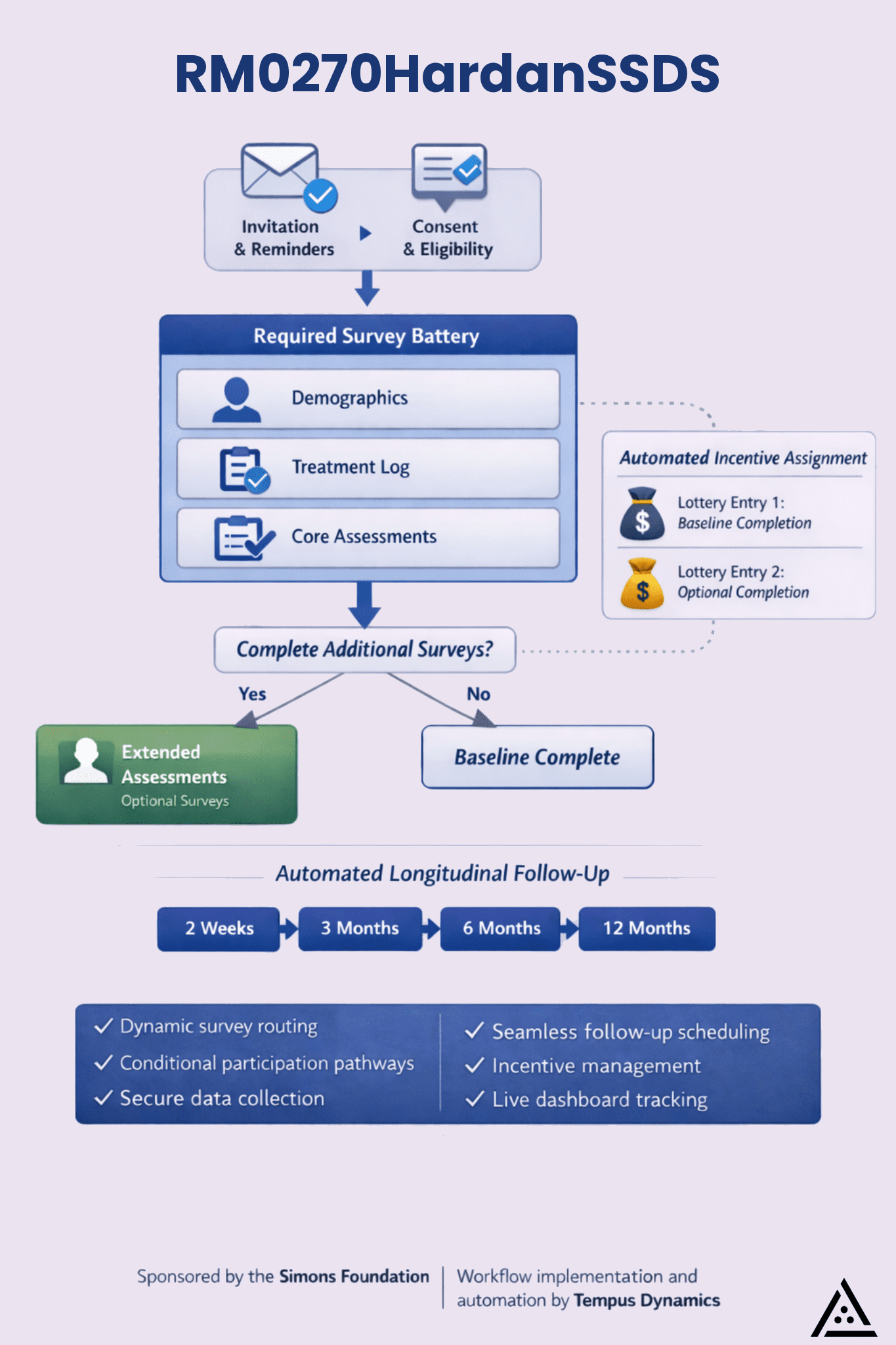
Coordinators were not responsible for chasing every optional branch. Participants stayed on a path that matched their answers and choices. Follow-ups and incentives followed the configured rules instead of a spreadsheet, supporting efficient longitudinal data collection while respecting engagement preferences.
Online study with group-based assignment
Studies that compare groups need more than a shared survey link. Participants have to be assigned to the correct group, each group may follow a different workflow (including a different consent path), and the order of surveys can itself introduce bias if every group always sees instruments in the same sequence. Incentive rules often differ by group as well. Doing that assignment and delivery by hand does not scale, and it is easy for order effects to creep in.
This online study highlights group-based workflow logic to support a rigorous experimental design. Synapse handled assignment and delivery as one configured workflow:
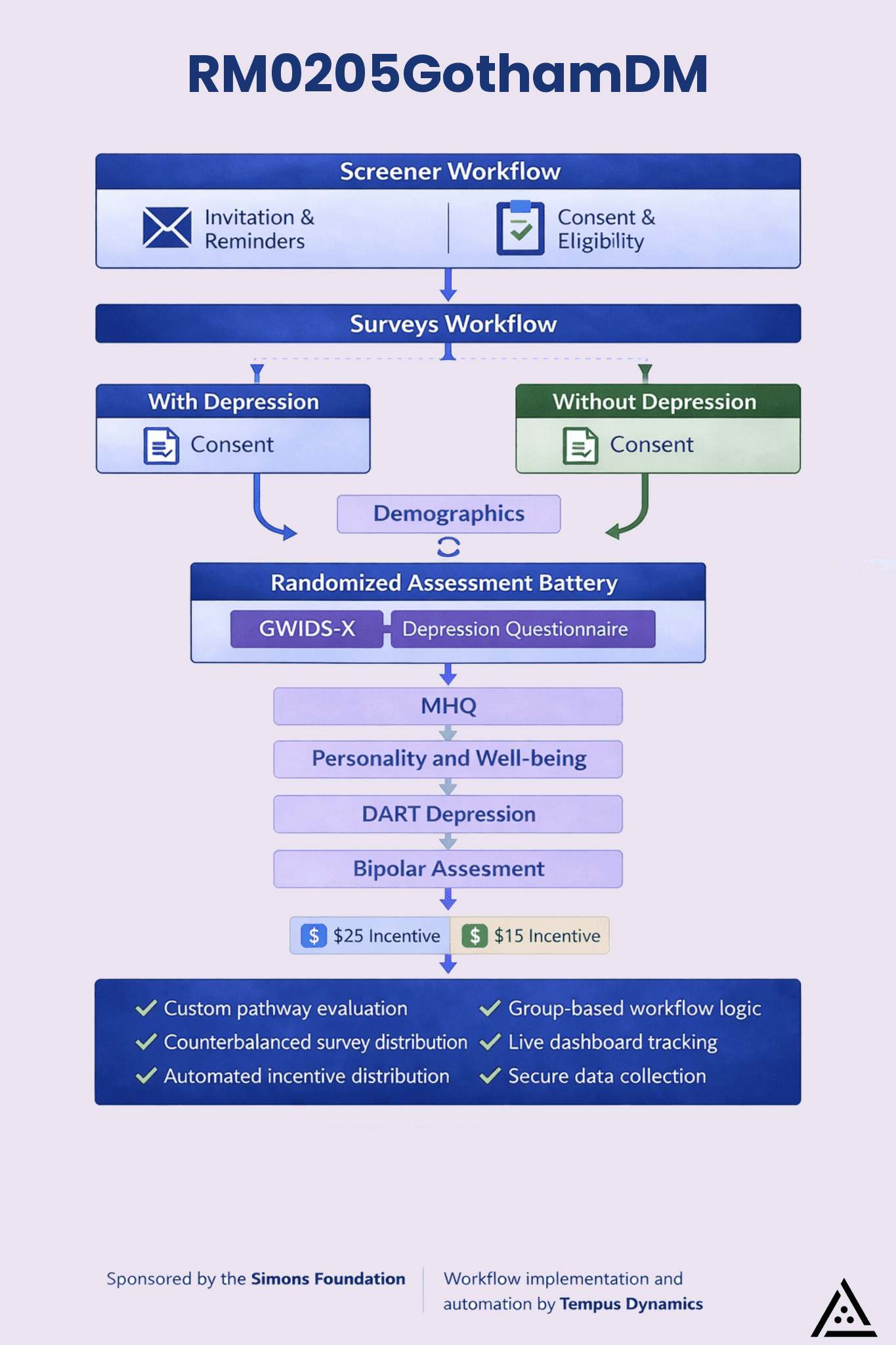
Assignment, survey order, and group-specific follow-up ran from the configured rules instead of coordinator judgment on each enrollment. Counterbalancing was part of delivery, not an after-the-fact adjustment. Incentives followed the same automation, so the study team did not process them as a separate manual step.
Multi-site longitudinal clinical study
A de-identified, multi-site, longitudinal in-clinic study has to run for the same protocol across institutions that do not share operations. Each site may invite, remind, and compensate participants on its own schedule. Follow-up timepoints stretch across visits. Data from one institution must not be mixed with data from another — including protected health information — even when the sites are using the same workflow engine.
This study illustrates how workflow automation can support complex clinical research across institutions. Synapse was configured per site rather than as one undifferentiated flow:
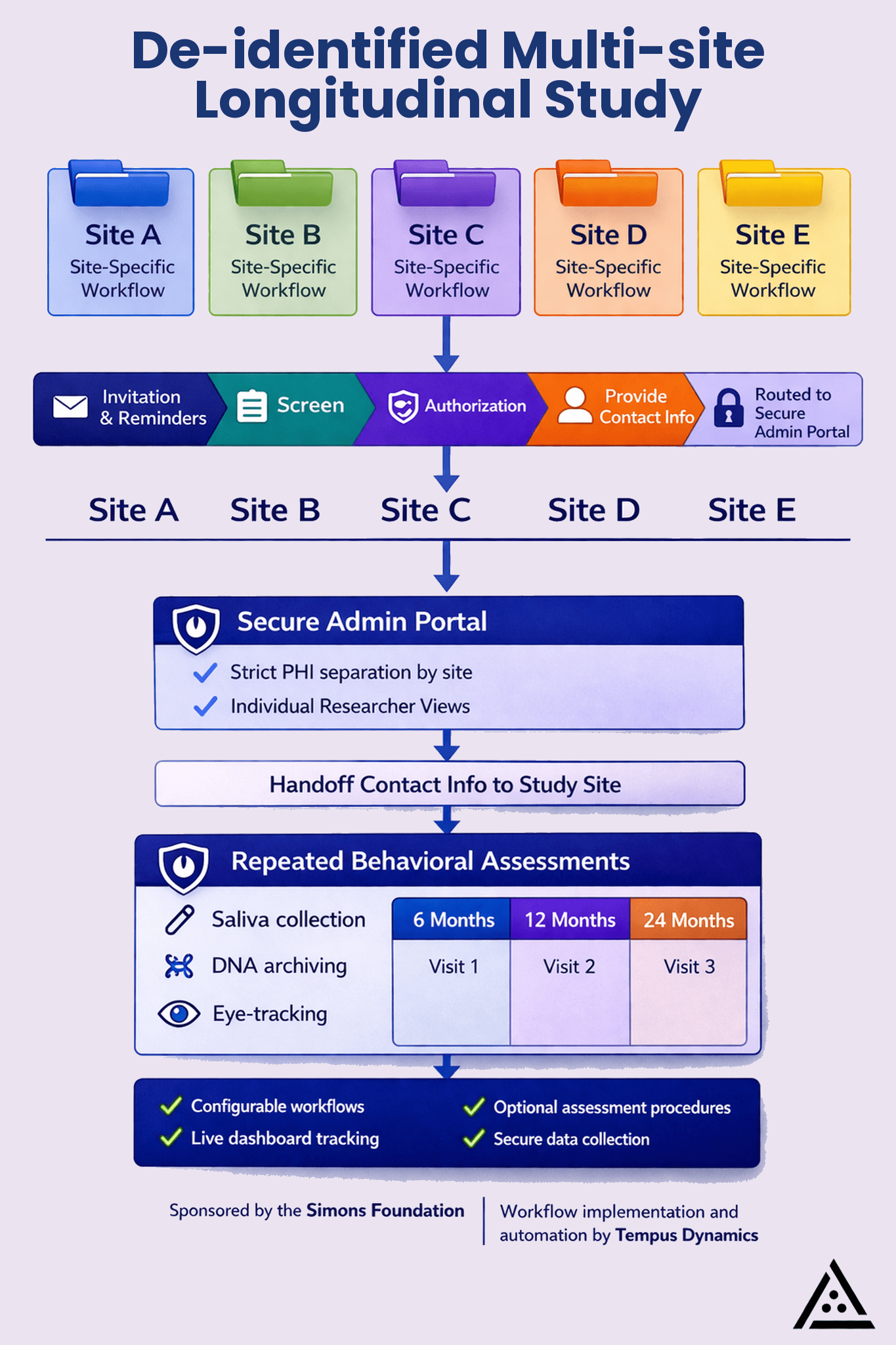
Sites could run on the same engine without adopting one another’s procedures or seeing one another’s data. Institution-level segregation stayed in place for the duration of the study. Follow-up timepoints and site-specific incentives continued to fire from the configured rules, so the multi-site design did not require a separate operations layer at each institution.
To learn more about Synapse and our other products and services, complete this form and our team will get in touch.